
Automotive Repair Work
Ever since I can remember, I have been obsessed with cars. The reason I became a mechanical engineer was because I wanted to work with cars and transportation, and mechanical engineering seemed like the best way to do so. The relationship I’ve had with fixing cars has definitely been love-hate, but it has no doubt made me a better engineer. I’ve found myself often debating things such as:
- Why would this be designed like this? Whoever is responsible is hopefully fired.
- There’s no way this is the torque spec. Or maybe it’s just rust welded.
- This is actually cool. I wonder how this was made.
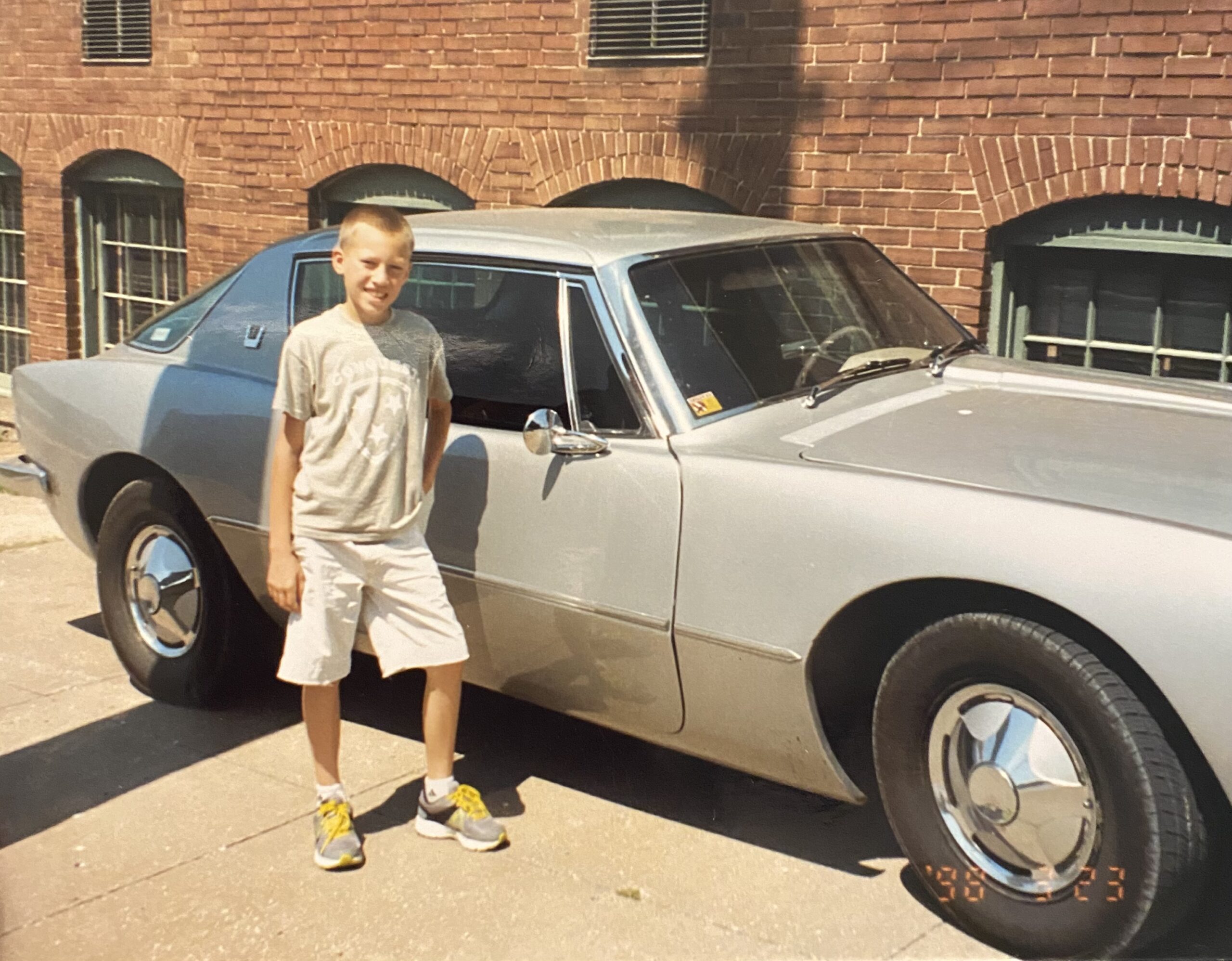
Younger me standing next to a Studebaker Avanti my step-grandfather was servicing
With these phrases in mind, exposing myself to repeated disassembly and reassembly of various car systems and parts has allowed me to grow vastly in my Design for Manufacturing principles, failure mode analysis, and theory to reality thinking. In this section, I’ll recap my more memorable projects, starting from most recent.
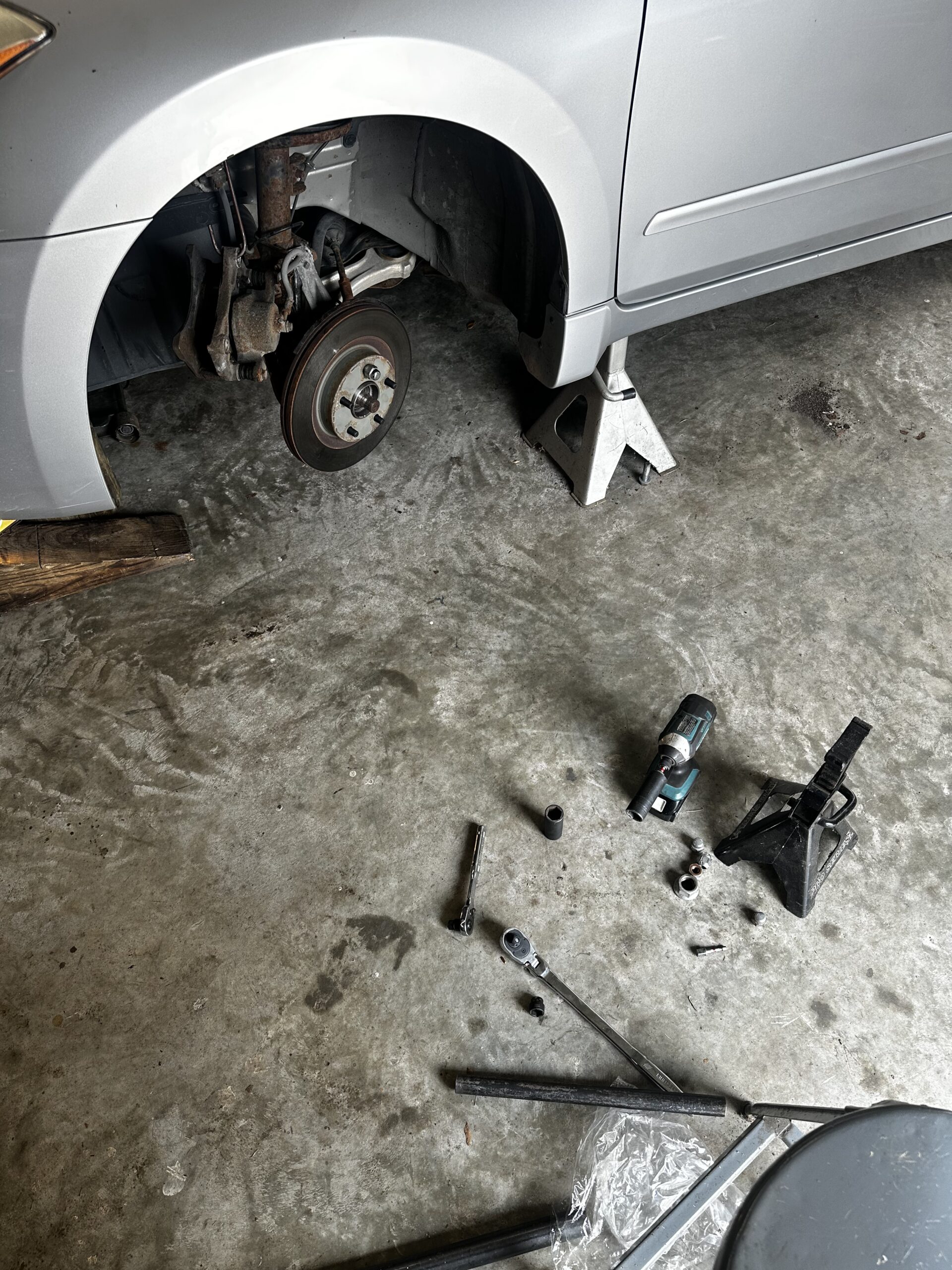
2012 Nissan Altima Front Wheel Bearing Replacement
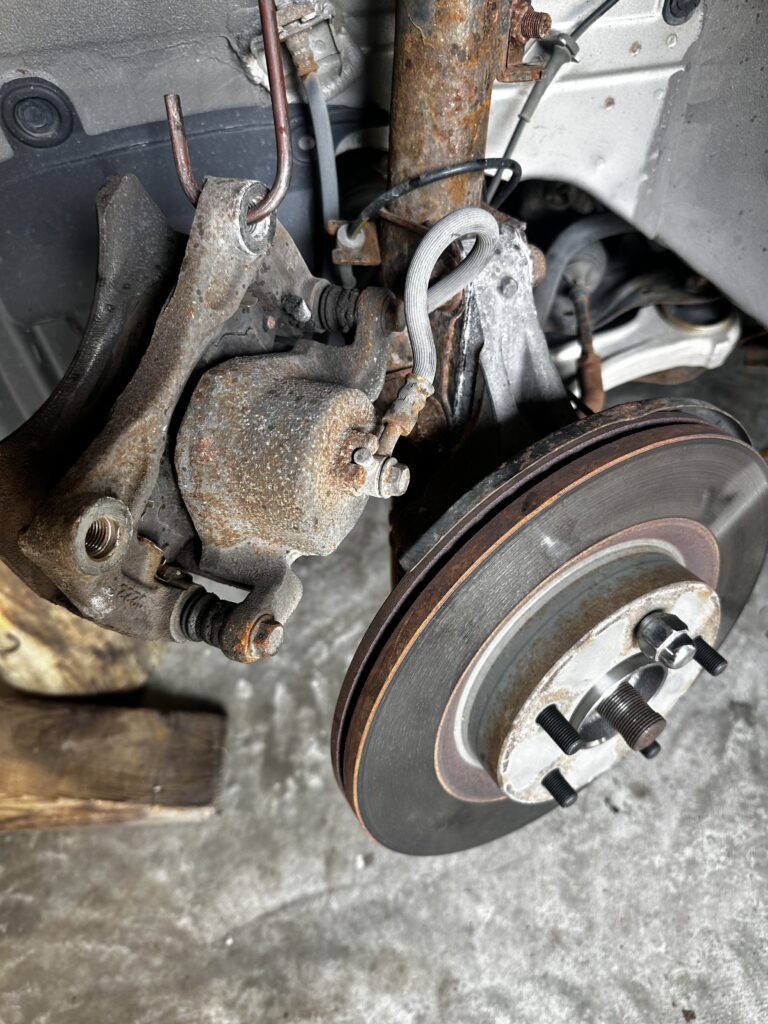
This project is a bit of an embarrassment for me, as I had a bad case of confirmation bias going. As I drove myself to North Carolina from Iowa for my latest internship, my car seemed to receive much more road noise as I switched to the asphalt roads prevalent around the state. So, I simply thought, “My tires must have some odd reaction with the asphalt here, and it makes my tires really loud.”
Fortunately for me, about a month and a half into my internship, one of my coworkers riding with me to lunch said, “You know your car is loud, right?” I then proceeded to explain why I thought it was the tires, and he pretty much shut me down and told me to test my wheel bearings. Sure enough, later that day, I checked, and it was most definitely my wheel bearing.
From there, I ordered the part and went down to that same coworker’s place to fix it. Thankfully, it was a relatively straightforward process, and my car no longer sounded like a plane rumbling down the tarmac. The biggest lesson for me here (and maybe anyone reading) is part technical, part not: if you’re not driving a Jeep Wrangler with 37-inch tires, and your car sounds like such, it’s probably not the asphalt. Mechanisms tend to let one know well when something is wrong, and recognizing when something is not operating correctly is a great skill to have.
2007 Toyota Sienna Sliding Door Cable Replacement (Twice)
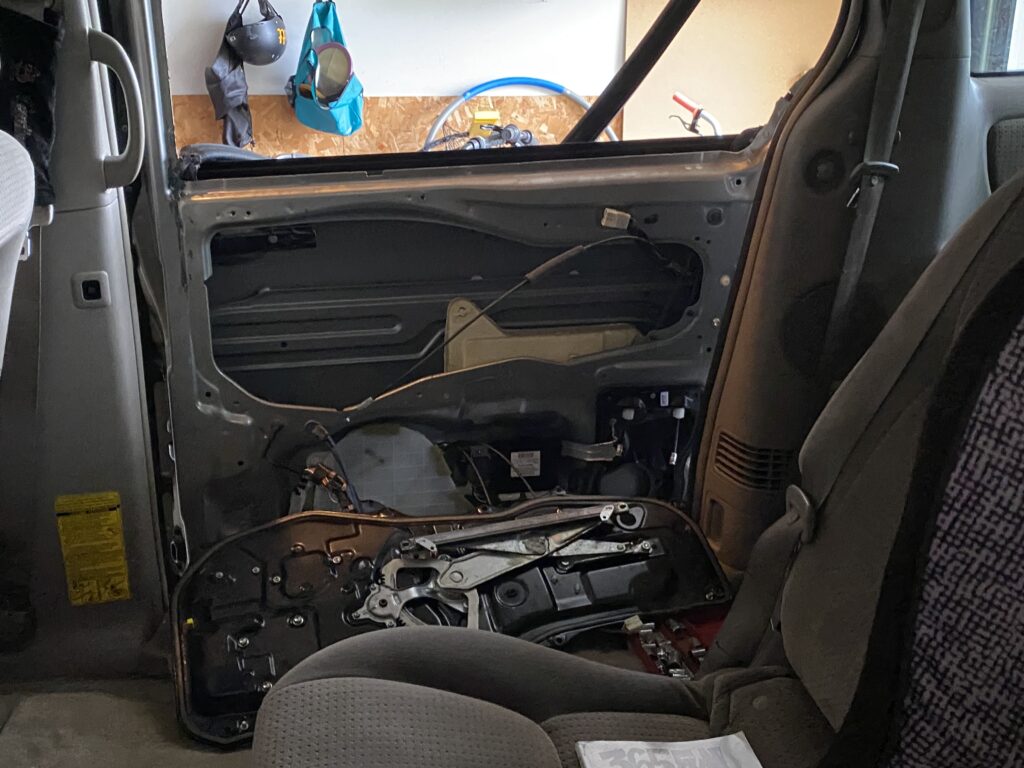
It’s not a typo that the sliding door repair is there twice. While I was in high school, the sliding door cable on my mom’s Toyota Sienna snapped, and instead of getting it fixed for $2,000, she asked if I wanted to do it in exchange for some new headphones. I, being a broke high schooler, said yes, although I might not have done it if I knew what was in store for me.
I grossly underestimated the complexity of the project from the beginning. To remove the old cable and install the new one, the entire door card, the window, and trim pieces all needed to be removed. Following that, re-threading the cable-pulley assembly through the door was nothing short of difficult, trying not to break the brittle plastic while correctly aligning the pulley assembly.
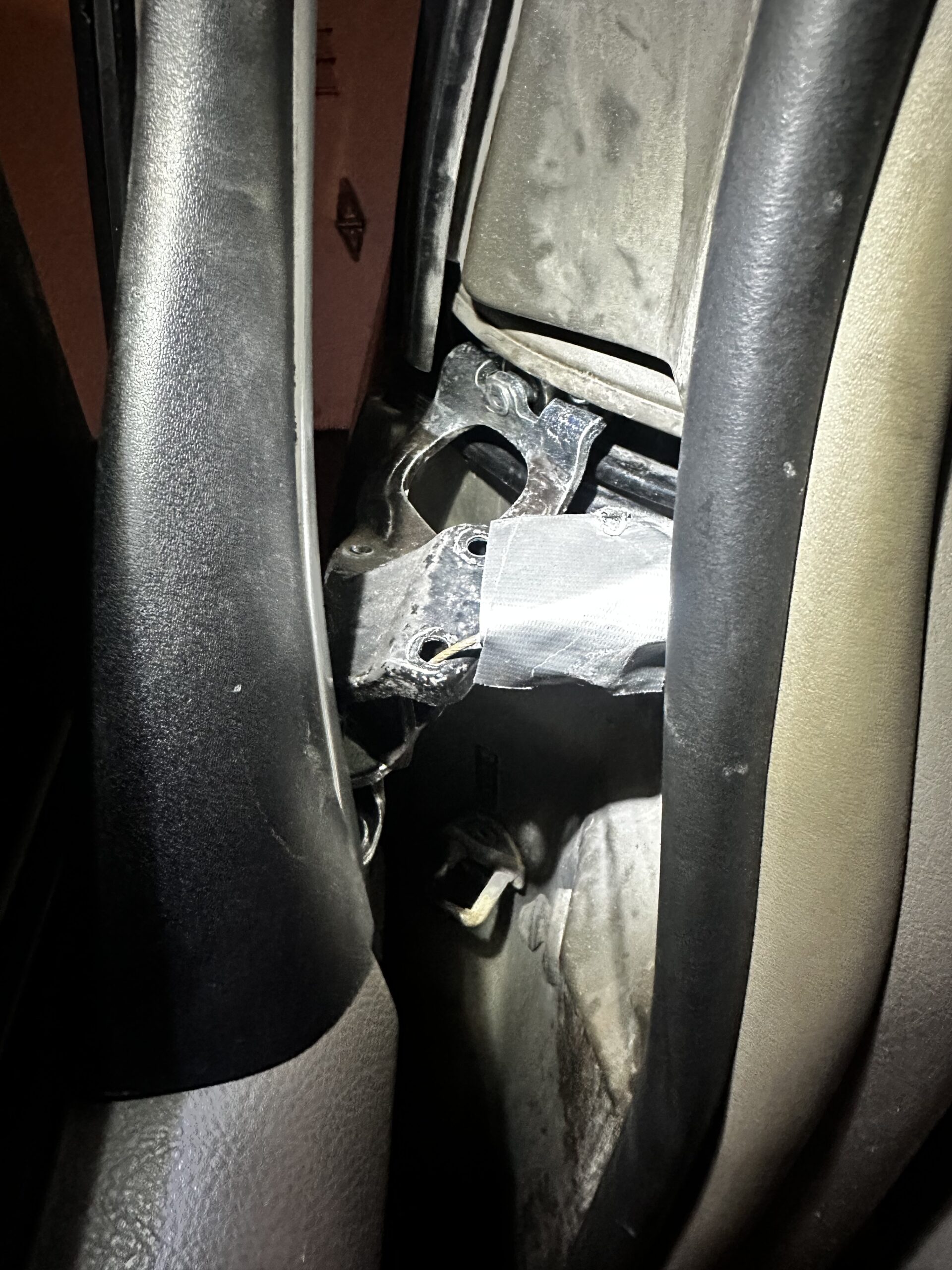
Metal cable for sliding door taped up before second repair
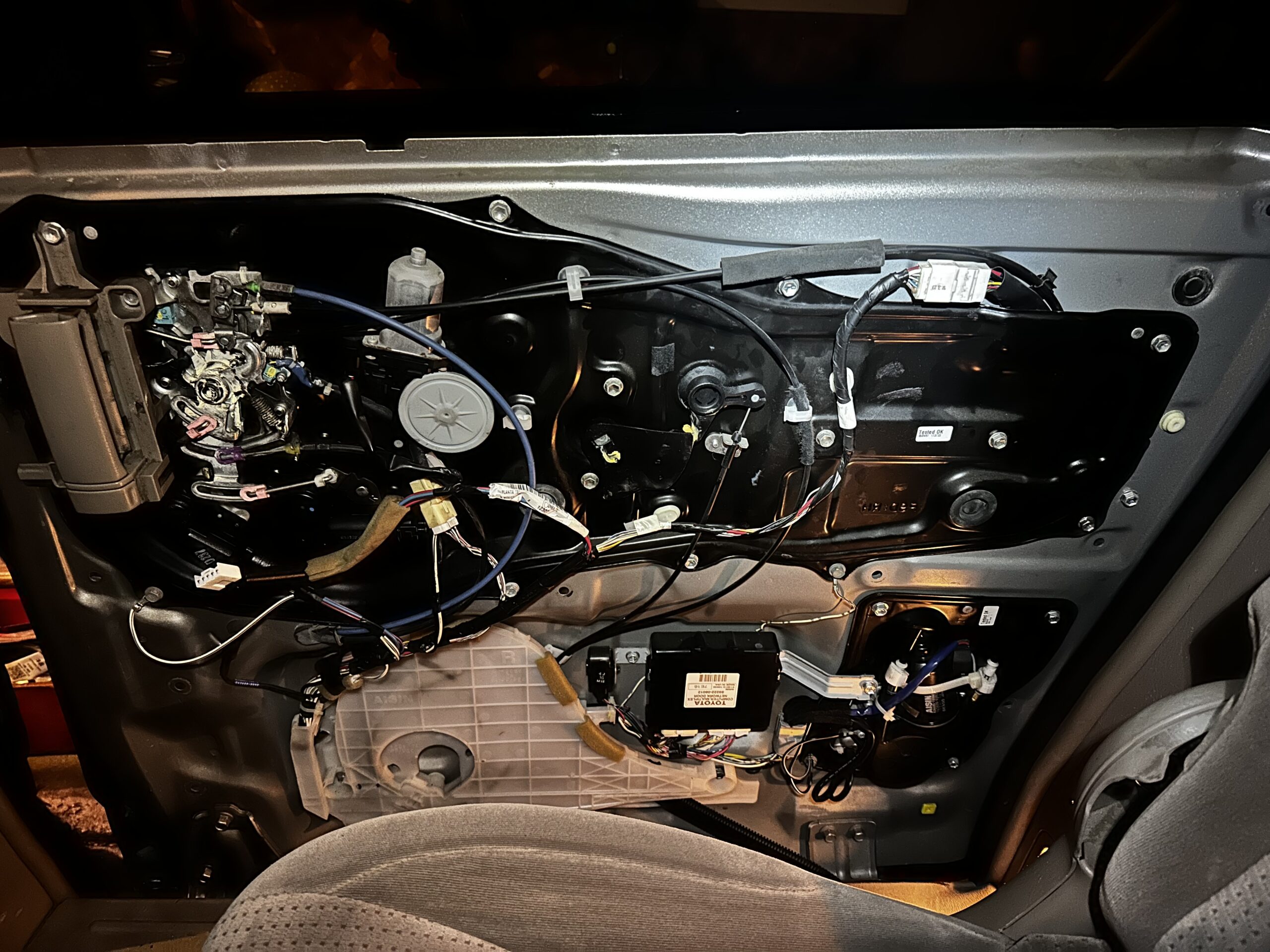
Second time disassembling door card
The first time I did the job, it took a little over 3 days to complete. The second time, it was 3 hours. Having the right tools, and knowing how to take something apart already, greatly increases efficiency when performing a task, and it’s why possessing background knowledge for any new task I start is so important, whether it be homework or fixing my car. Another lesson taken was the immense complexity involved in certain everyday objects taken for granted and highlighted the fact that the best engineering is often the simplest. Using the power sliding door button is something a large portion of the population does every day without realizing how intricate the system really is.
2007 Toyota Sienna Spark Plug and Coil Pack Replacement
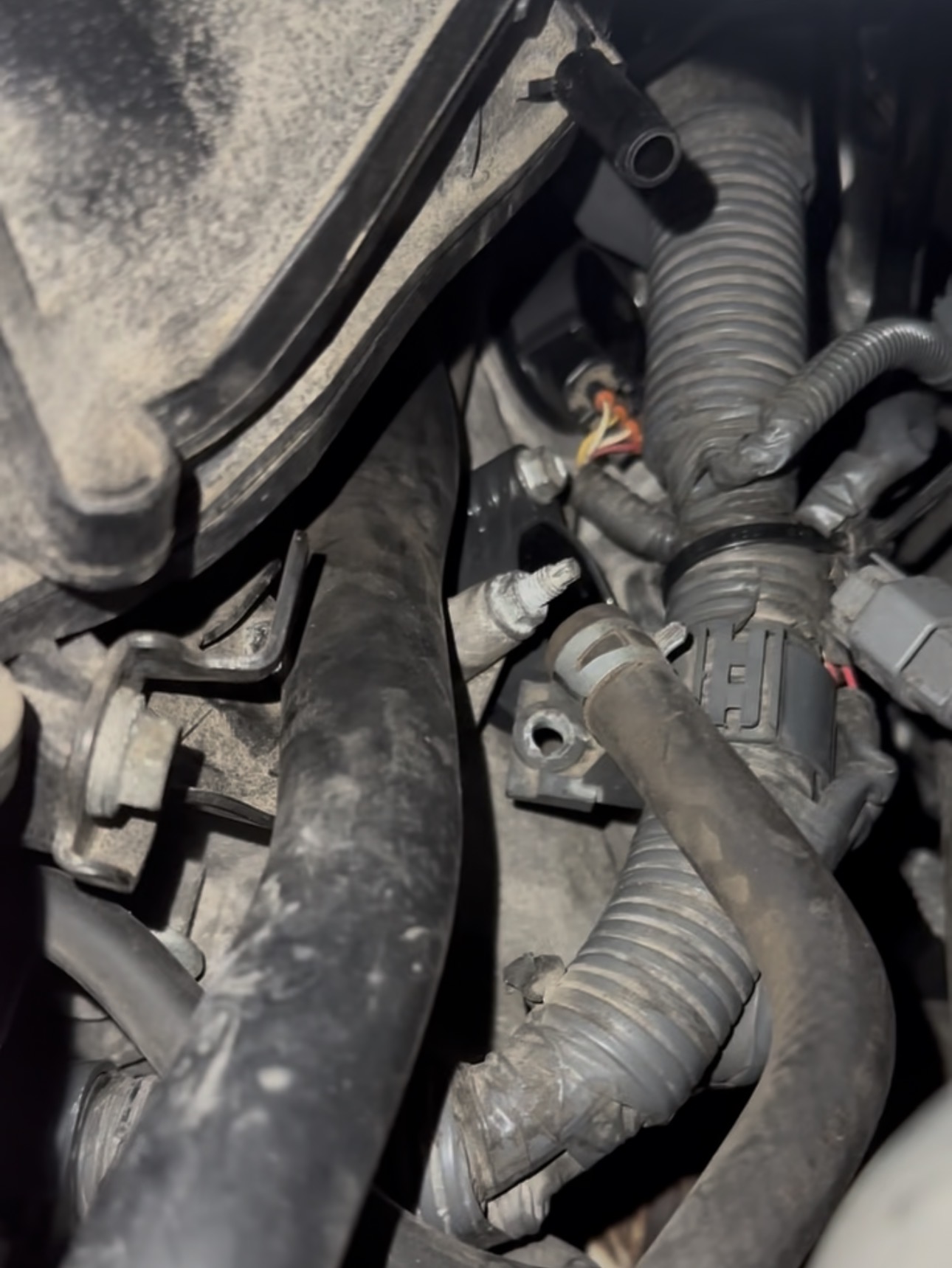
Upon borrowing my mom’s minivan to road trip up to Minnesota from Iowa for 2025 July 4th, the engine sprung a misfire halfway up the route. Fortunately, we were able to switch out vehicles with one of my friend’s parent’s cars, but that left my mom’s minivan to fix. Upon driving it back to my Collins Aerospace housing, I figured it was on me to fix the vehicle I had borrowed. Unfortunately, second-generation Toyota Sienna’s have cylinders 1, 3, and 5 facing towards the firewall and under the windshield wiper cowl, which means an incredibly tedious replacement task.
Beginning with the fact I was limited on tools, disassembly required some interesting choices of duct-taped sockets and strange prying mechanisms. During the repair, which was over the course of several days, I also managed to:
- Become extremely sick
- Wait out a severe thunderstorm with the intake plenum off the vehicle
- Find other ways around town while I was vehicle-less
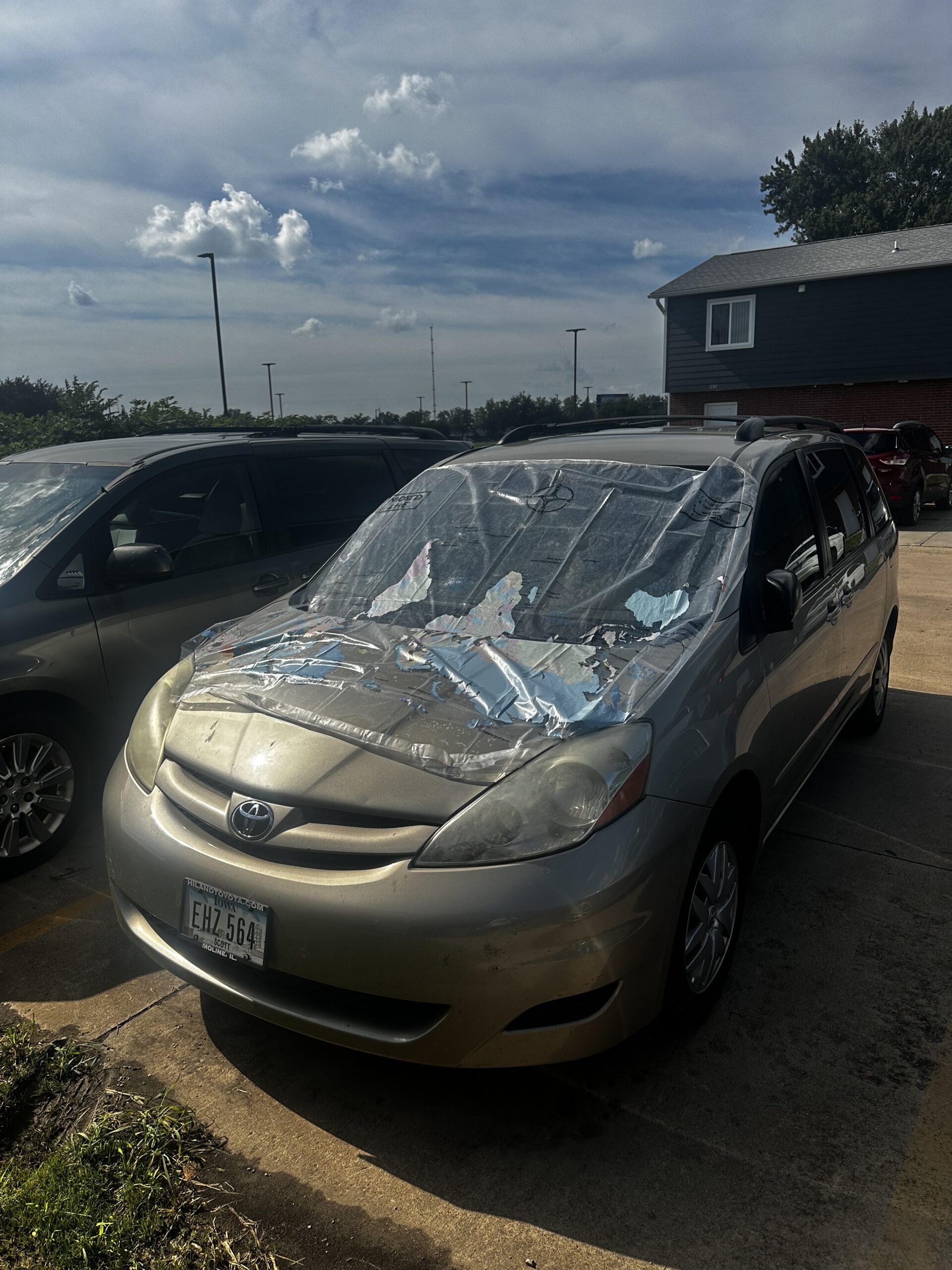
Shower curtain solution I used to keep water from entering the spark plug housings and combustion chambers during the storm
Taking the day off to recover from sickness was just something that needed to be done. Fortunately, before the bad thunderstorm, I was able to take down our shower curtain and tuck it around the hood to prevent water from entering the spark plug holes; and I willed myself to walk anywhere I needed to while the van was missing in action.
Finally, after a long week, I thought the job was done, but when I went to start it up, the van sounded worse than before. Defeated (and not wanting to blow the van up), I hired a group of other co-ops to push the van across the street to the nearby mechanic. The fix? I had forgotten to plug the fuel injectors back in. Ultimately, I still saved lots of money “doing” it myself, but this project taught me that having the rights tool to do the job is incredibly important, avoiding sickness and weather events helps timelines, and that I should always remember how to put things back together.
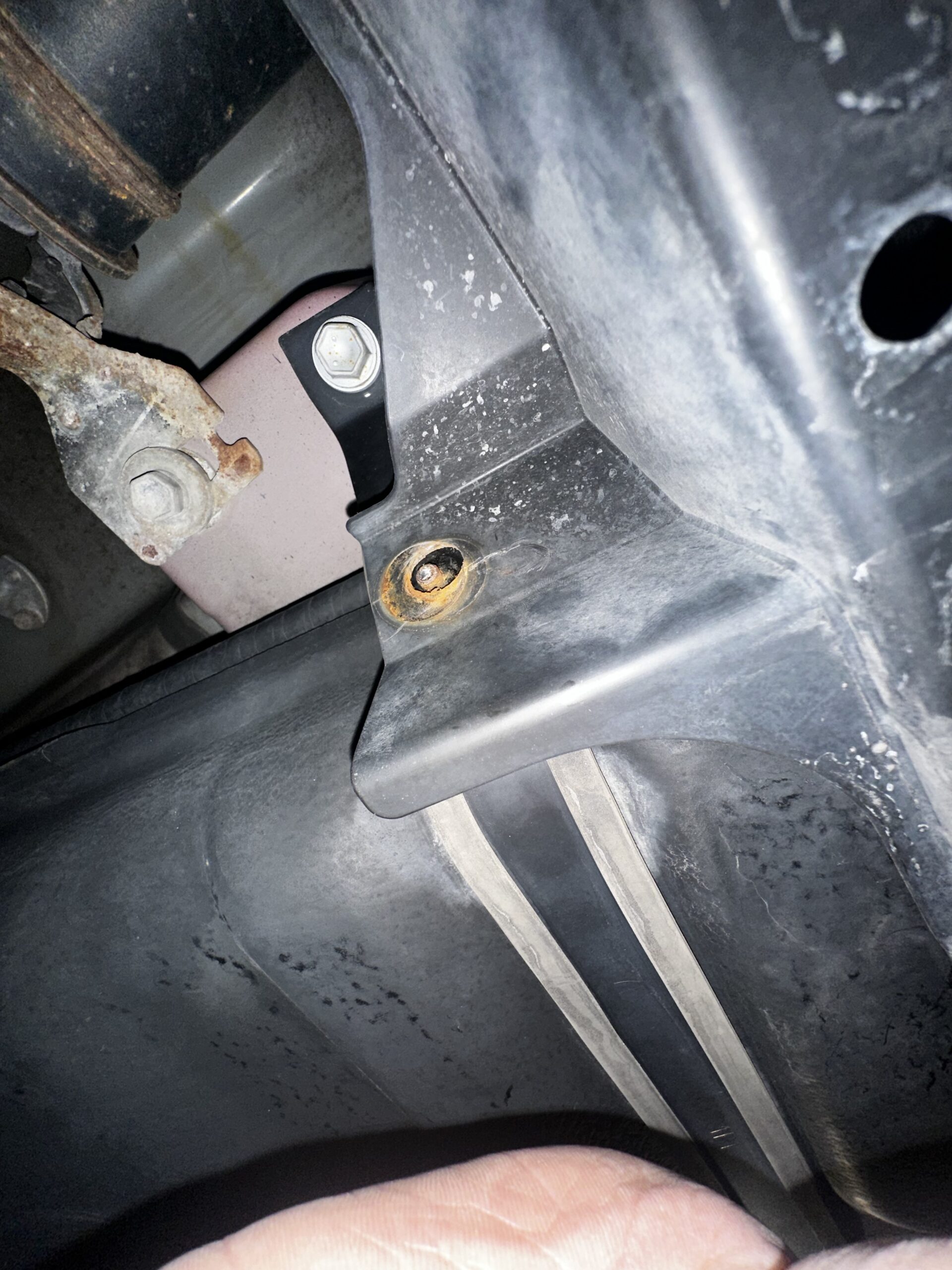
2014 Toyota RAV4 Charcoal Canister Replacement
Using my phone camera to locate a threaded standoff
This project was most likely optimized for someone with a vehicle lift or smaller than 6’4 me.
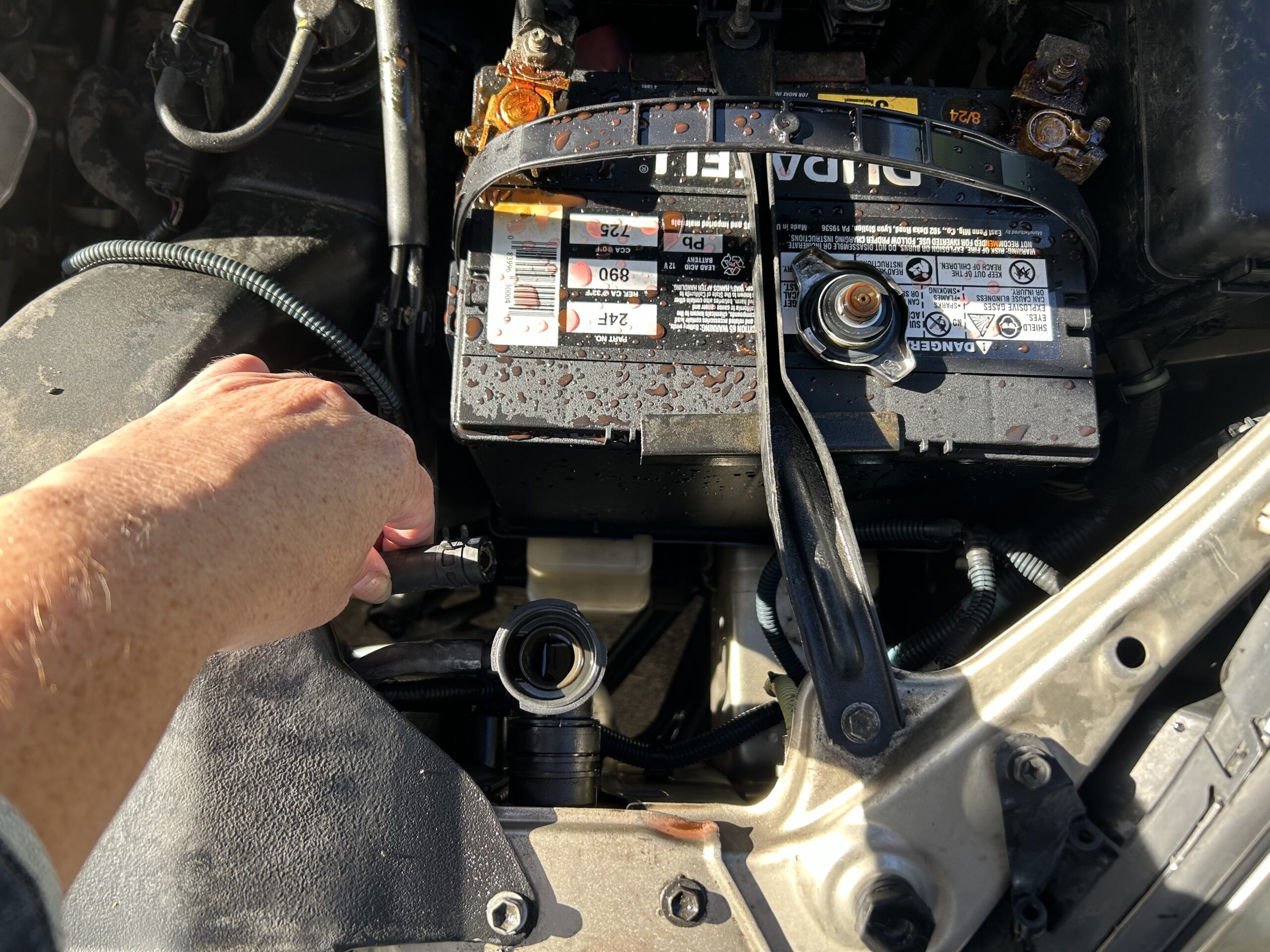
2007 Toyota Sienna Engine Coolant Filler Neck Replacement
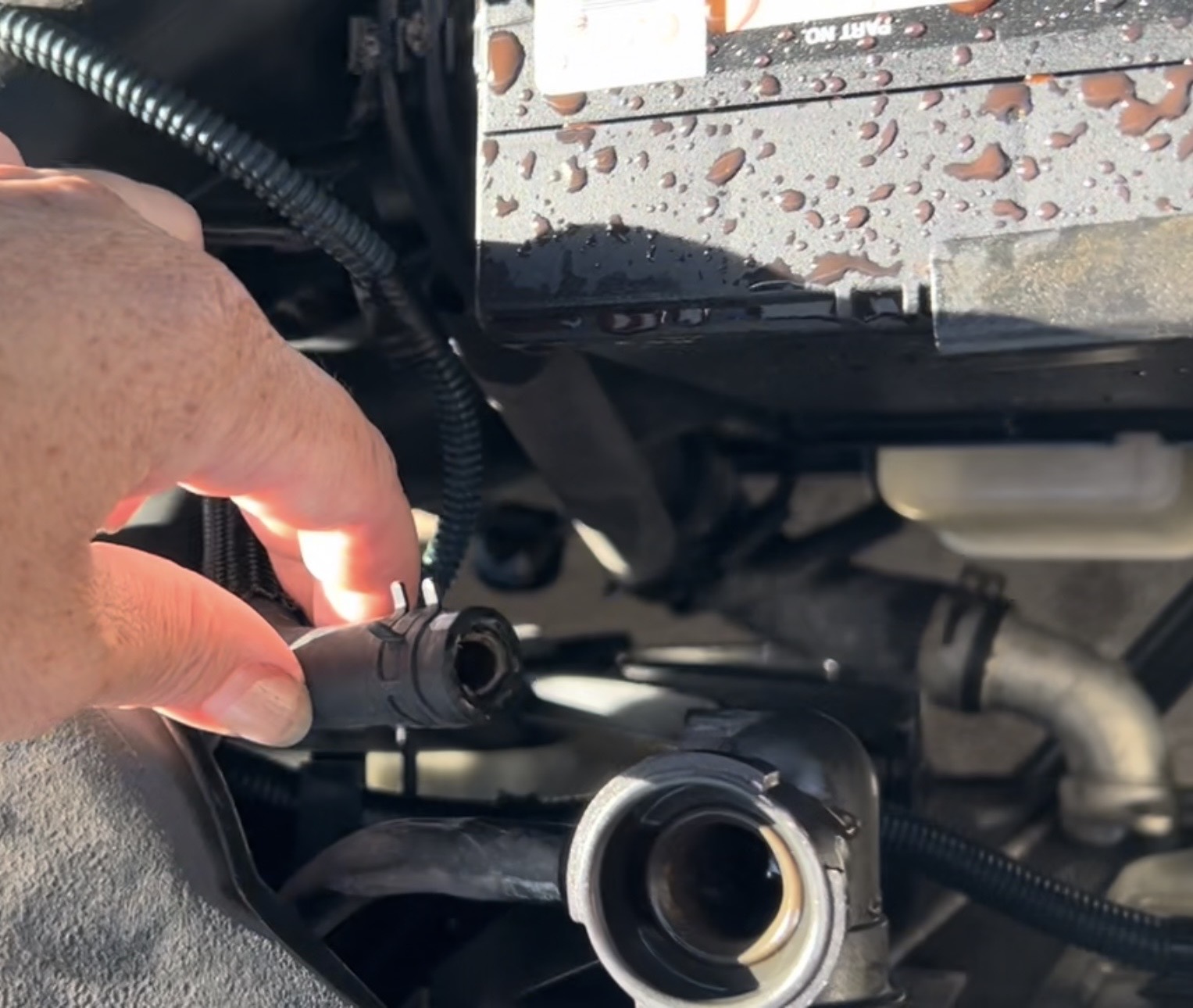
Snapped filler neck inlet before repair
I replaced the radiator coolant attachment at 3 A.M. after it broke and poured coolant over my mom’s engine bay.
2007 Toyota Sienna Sliding Door Track Repair
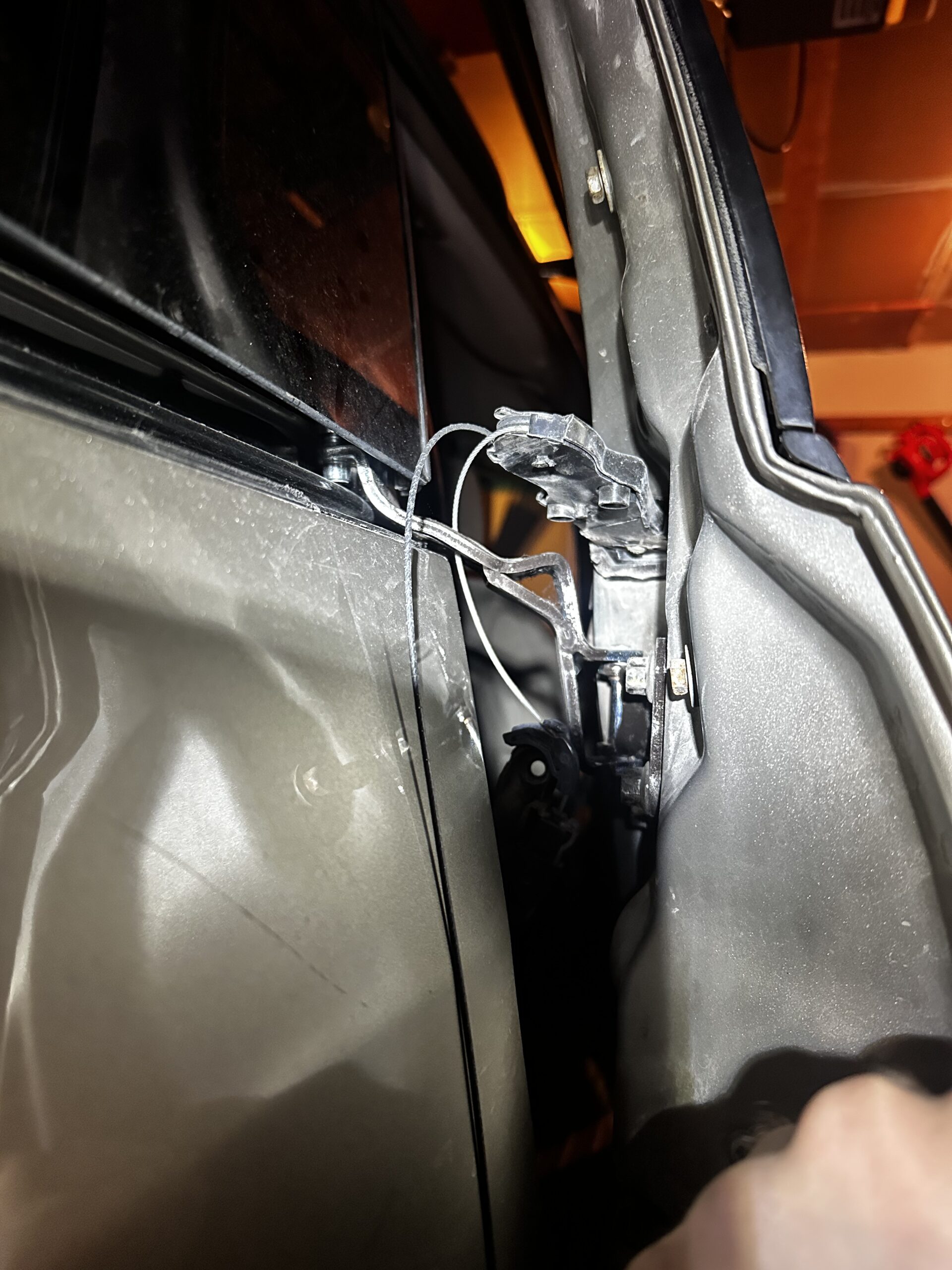
Door suspended with center sliding assembly detached
I replaced my mom’s center sliding door hinge & roller assembly causing the sliding door to be inoperable.
2012 Nissan Altima Brake Assembly Replacement
I replaced my rotors when they were warped so badly you’d think you were driving on rumble strips every time you applied the brakes.
2009 Nissan Sentra Front Suspension Replacement
Completed when one of my high school friends had completely destroyed their shocks and needed a hand in the school shop.
All these projects were immensely valuable to me as an engineer. Getting my hands dirty and learning how others choose to put things together, as well as how they envision disassembly and repair to happen, allows for a new perspective on any mechanical engineering task.